How the One Big Beautiful Bill, Medicaid work requirements, and the rollback of ACA dental benefits are creating the largest surge in dental tourism the United States has ever seen.
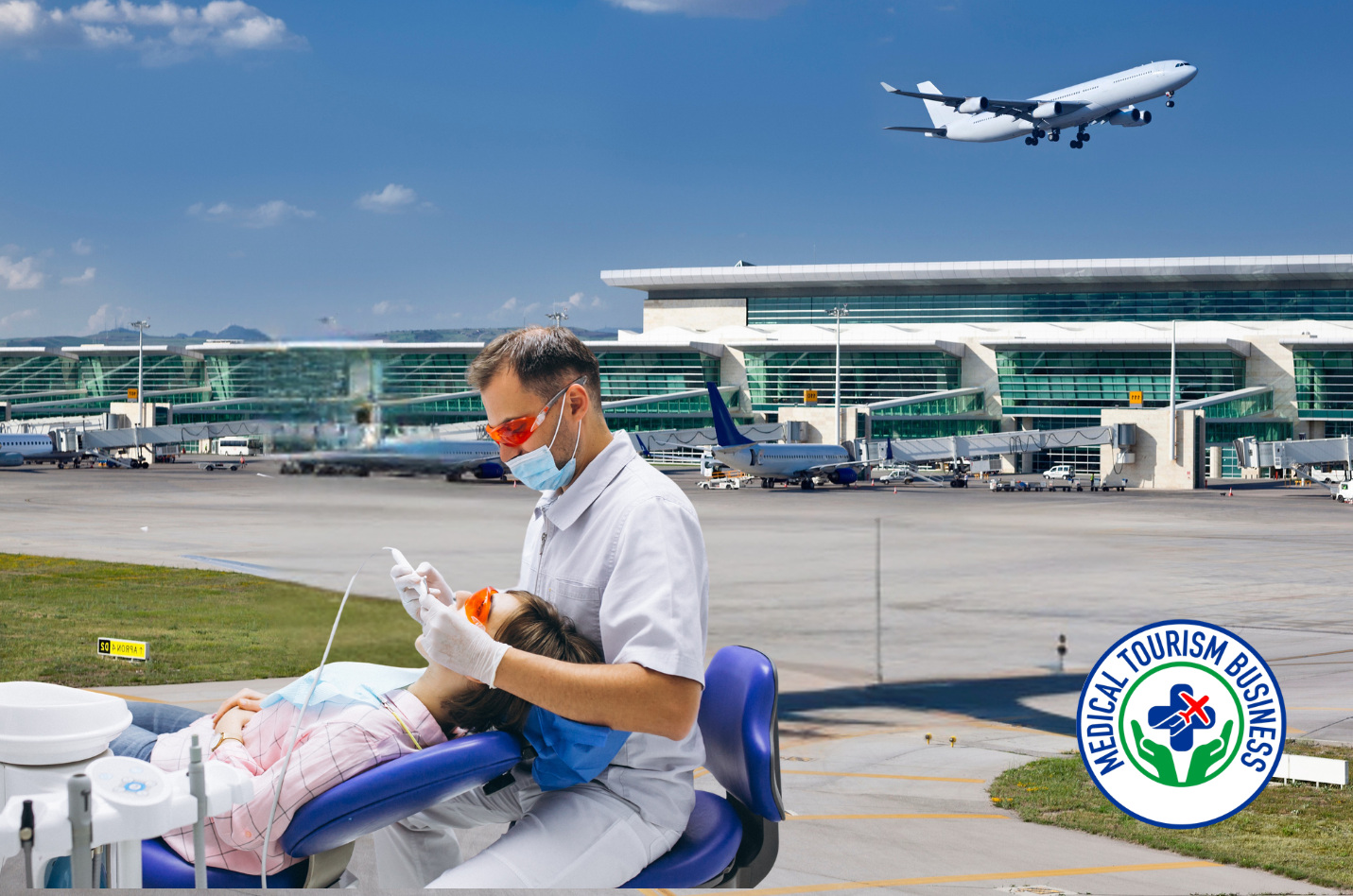
America has always had a dental care problem. But in 2026, that problem became a crisis — and for millions of Americans who can no longer afford to see a dentist at home, the answer is increasingly found abroad.
A new report from the CareQuest Institute for Oral Health found that nearly 10 million Americans have already traveled outside the United States for dental care, making it the single most common form of medical tourism in the country. Fifty-eight percent of those travelers cited lower costs abroad as their primary reason for going. An additional 9% pointed directly to a lack of insurance coverage in the US.
Those numbers were already significant before 2026. Now, three converging policy shifts — each hitting at almost the same time — are about to make them look small.
What Is the One Big Beautiful Bill, and What Does It Cut?
In the spring of 2026, Congress passed HR1, formally titled the One Big Beautiful Bill Act. The legislation includes more than a trillion dollars in cuts to Medicaid — the federal-state program that provides health coverage to low-income Americans, people with disabilities, and children.
Medicaid is not administered by the federal government directly. States run their own programs using a combination of federal and state funding. When the federal share shrinks, the gap lands on state budgets. And when state budgets tighten, the first thing to go is often adult dental coverage — because unlike pediatric dental care, adult dental benefits through Medicaid have never been federally required.
States were already making cuts before the bill passed. Now, with a federally-mandated funding shortfall bearing down on them, the trend is accelerating. Several state legislatures have already moved to eliminate or reduce adult dental benefits from their Medicaid programs entirely.
For adults who depended on those benefits — many of whom have no other coverage — this is not a minor inconvenience. It is the loss of their only realistic pathway to dental care.
The Three Policy Hits Landing at Once
The Medicaid funding cut is the most dramatic piece of the picture, but it is not the only one. Two additional federal policy shifts are converging at nearly the same moment, and together they are reshaping who can access dental care in America.
1. Medicaid Work Requirements — Effective July 31, 2026
On June 1, 2026, the Centers for Medicare and Medicaid Services released an interim final rule implementing the Medicaid community engagement (work) requirement — a provision built into HR1. The rule took effect on July 31, 2026, with full state compliance required by January 1, 2027.
Under this rule, certain Medicaid enrollees must now provide extensive documentation proving they are unable to work in order to remain enrolled. The paperwork burden alone is expected to push millions off the rolls — including many people who are legitimately eligible. The Robert Wood Johnson Foundation estimates that millions of Americans could lose health coverage as a direct result of these requirements.
This is not a theoretical risk. During the Medicaid redetermination process that followed the end of the COVID-19 public health emergency in 2023, millions of Americans were disenrolled — many due to administrative failures rather than actual ineligibility. Work requirements create the same dynamic on a permanent basis.
2. The ACA Dental Benefit Reversal — Effective 2027 Plan Year
In May 2026, CMS finalized a rule reversing a 2024 policy that had allowed states to classify routine adult dental services as an essential health benefit in ACA Marketplace Exchange plans — the plans that millions of Americans purchase through healthcare.gov.
The 2024 policy would have given states the flexibility to include cleanings, x-rays, fillings, and root canals as covered benefits starting with 2027 plans. CMS reversed that flexibility before it ever took effect, citing the ACA’s statutory focus on pediatric oral care as justification.
The result: Americans who rely on ACA Marketplace plans — not Medicaid, not employer coverage — are losing a potential pathway to affordable dental care before it ever opened.
3. Medicare Still Has No Dental Coverage
This is not new, but it is newly urgent. Original Medicare — the public insurance program for adults 65 and older — has never included dental coverage. Over 30 bills to add dental benefits to Medicare have been introduced in Congress since the 1990s. All have failed.
More than half of all Medicare recipients are enrolled in Medicare Advantage plans — managed care plans run by private insurers that do offer some dental coverage. But researchers at Mass General Brigham found that only 8.4% of those plans met quality standards such as no co-pays for routine cleanings. And those offerings are being scaled back further, as Medicare Advantage insurers respond to reimbursement rate reductions announced by the Trump administration.
For older Americans, the math is increasingly unworkable. As CareQuest Institute CEO Wade Rakes put it, “Seniors are at risk for some of the most needed but also most costly oral health procedures and services as they age.” When those procedures cost tens of thousands of dollars domestically and a fraction of that abroad, the decision calculus shifts.
The Gap That Already Existed
Before any of these 2026 policy changes, American dental coverage was already broken in ways that most people outside the industry don’t fully appreciate.
As of 2024, approximately 72 million American adults had no dental insurance — nearly three times the proportion of adults without health insurance. Even among those who do have dental coverage, the protection is often illusory.
The average annual benefit cap for a major dental insurer like Delta Dental sits at $1,500 per person — the same figure offered when dental insurance was first introduced in the 1950s. Dental costs have increased dramatically over those seven decades. The cap has not moved. People who hit their annual maximum are nearly three times as likely to have sought dental care abroad, according to the CareQuest report.
Meanwhile, the cost of dental care in the United States remains exceptionally high by global standards. Dentistry is a high-overhead business — operating costs exceed 70% of revenue in many offices, driven by expensive equipment, specialized materials, and the procedural nature of virtually every dental visit. Those costs are passed directly to the patient.
What Dental Care Costs Abroad vs. at Home
The price differential between US dental care and care in many international destinations is not marginal. It is transformative.
According to the Journal of International Oral Health, dental care in popular medical tourism destinations typically costs 50% to 75% less than equivalent care in the United States. In practical terms:
-
A crown that costs $1,500 in the US may cost a fraction of that in countries like Mexico, Colombia, or Turkey
-
A full-arch implant procedure priced at $40,000 to $50,000 domestically can run $10,000 to $15,000 or less abroad
-
Routine cleanings and basic restorative work accessible to nearly any budget internationally can be cost-prohibitive without insurance in the US
These savings are not always a compromise in quality. Many patients report high-quality outcomes — same-day procedures, shorter wait times, and experienced practitioners trained to international standards. As Texas A&M College of Dentistry professor and 2025 Texas Dentist of the Year Dr. Partha Mukherji noted, “I would like to dispel the conception that just because [dental tourism] is cheaper that it’s automatically horrible care. I’ve seen a lot of great work.”
The dental tourism market is expected to reach $65.4 billion globally by 2032, growing at a compound annual growth rate of 22.03%, according to SNS Insider. That growth is being driven in significant part by the policy environment now taking shape in the United States.
Who Is Being Pushed Toward Dental Tourism
The patients being driven abroad are not a monolith. They span demographics, income levels, and geographies — united primarily by a healthcare system that has failed to meet their needs at a price they can afford.
Low-income adults on Medicaid — particularly those in states that never offered adult dental benefits, or those that are now eliminating them — have long turned to international care as their only realistic option. The new policy changes accelerate a trend that was already in motion.
Seniors on Medicare face a structural gap that has existed since the program was created. Original Medicare covers hospitalization and physician services. It does not cover teeth. For retirees on fixed incomes facing four-figure or five-figure dental bills, the math increasingly points abroad.
Middle-income Americans with private insurance hit their annual caps quickly. A single crown, a root canal, or a set of implants can exhaust a year’s worth of dental benefits in one appointment. For those facing multi-procedure treatment plans, the cost difference between domestic and international care is often tens of thousands of dollars.
Uninsured Americans — 72 million of them as of 2024, a number that will grow under the weight of new Medicaid restrictions — have always faced this reality. As that population expands, so does the base of people actively considering dental care abroad.
The Timeline: When These Changes Hit
For anyone tracking this space — whether as a patient, a clinic operator, or a business professional in the medical tourism industry — the implementation timeline matters.
Date |
Event |
|---|---|
May 2026 |
CMS finalizes rule reversing ACA adult dental essential health benefit |
June 1, 2026 |
CMS releases Medicaid work requirement interim final rule |
July 31, 2026 |
Medicaid work requirements take effect |
October 1, 2026 |
Federal Medicaid funding cuts begin; immigrant eligibility restrictions take effect |
December 31, 2026 |
Deadline for states to implement work requirements |
January 1, 2027 |
Full state compliance required; ACA dental benefit reversal takes effect for 2027 plan year |
The cascade is happening now. The downstream effects — patients losing coverage, delaying care, and ultimately seeking alternatives — will compound through the second half of 2026 and into 2027.
What This Means for the Medical Tourism Industry
The convergence of these policy shifts is not just a healthcare story. It is one of the clearest demand signals the medical tourism industry has ever seen.
When millions of Americans lose dental coverage simultaneously, they do not simply stop needing dental care. They defer it until it becomes urgent, and then they find alternatives. International clinics with strong infrastructure for serving foreign patients — English-speaking staff, transparent pricing, established follow-up protocols — are positioned to meet that demand at a scale that was not realistic even a few years ago.
The question is not whether demand for international dental care will increase. The data makes the direction clear. The question is who will be positioned to serve that demand effectively.
Reach Your Full Potential in Medical Tourism with MTB
At MTB, we are dedicated to supporting professionals and organizations in the medical tourism industry as they strive for success. As a leading provider of patient leads, certification, and training, we offer comprehensive programs, expert guidance, and valuable resources designed to help our members achieve their goals and reach their full potential in the global healthcare market. With a focus on excellence and innovation, we help our members navigate the complex and dynamic world of medical tourism.
Tel/WhatsApp: +1 (561) 909-7178
Build your medical tourism business
Turn industry knowledge into a working strategy
MTB provides certification, patient leads, training, and business resources for facilitators and healthcare providers.
Explore Certification
About the author
Gilliam Elliott Jr.
Gilliam has devoted himself to educating people about medical tourism for the last decade. Throughout that time, he has helped companies and individuals from all over the world start, manage, and grow their businesses by implementing proven practices and strategies. His passion for this industry has driven him to help founders create successful and profitable medical tourism businesses, achieve long-term growth, and become leaders in the field.