When you’re a new medical travel facilitator, it’s easy to get distracted by things that seem important in the moment but don’t move the business forward in any meaningful way. Many founders assume they need a polished office, a full team, or expensive software before they can begin. This is called Shiny Object Syndrome: spending time and money on things that look good but don’t move the business forward.
By the end of this article, you’ll know exactly where to spend your first dollars, and just as importantly, where not to, so you can avoid wasting money on things that won’t help your business grow.
Here’s the truth: you can start a medical tourism business on a lean budget of $5,000, or invest as much as $50,000. But if that money goes toward the wrong things, both the $5,000 startup and the $50,000 startup will struggle to gain traction. The size of your budget doesn’t determine whether you succeed. Where you spend it does.
Here are the five things to prioritize when starting a medical travel business.
1. Spend on What Grows the Business
In the early stages, every dollar you spend either moves you closer to your first client or further away — so it pays to be deliberate about where it goes. These days, you don’t need a formal office to get started. A laptop, a reliable internet connection, and a solid understanding of the industry are enough to begin. Patients don’t care about your office setup; they care about how well you handle their medical trip.
The real cost of spending on the wrong things isn’t just the money itself. It’s the time you lose, because every dollar spent in the wrong place shortens how long you can keep your business running before your budget runs out.
Before making an early purchase, ask yourself one simple question: does this help me learn the business, or does it help me reach clients? If the answer is no to both, it can wait.
2. Learn the Business First
Your knowledge should be one of the first things you invest in. Taking action without understanding the industry is one of the leading causes of failure, not just in the medical tourism industry, but in business generally.
Running this kind of business means handling people’s health and travel at the same time. Without proper training, you risk becoming a liability to your clients instead of an asset. Proper training teaches you how to launch, manage, and run it the right way from day one, so you understand your responsibilities and the standards you’re expected to meet.
Learning through trial and error is the most expensive education there is, because a serious mistake in this field can cost more than money. It can cost your reputation, and potentially your client’s health. This is part of why certification programs like the Certified Medical Travel Agent (CMTA) certificate exist: to give new founders the credibility and knowledge that shows patients and hospitals they know what they’re doing.
3. Build a Website That Converts Visitors Into Clients
Your website is the first thing a patient or partner sees, and they’ll judge your business by it before ever speaking with you. In this field, people are deciding whether to trust a stranger with their health and travel to another country, so your website has to answer one silent question: can I trust this company?
A few simple adjustments can make a real difference:
Make trust symbols visible. Certifications, the clinics you work with, and real photos of the doctors you partner with make your business look proven and credible. In medical tourism, proof of legitimacy is what converts visitors into clients, since one of the biggest fears traveling patients have is whether they’ll receive the quality of care they’re paying for.
Make it clear within seconds what you do. Visitors should immediately understand the countries you serve and the procedures you focus on without digging through your site. Confusion kills trust, so keep this information front and center.
Make it easy to take the next step. Clear call-to-action buttons throughout your site ensure that a visitor who’s ready to reach out never has to guess what to do next.
These are just a few adjustments that can meaningfully improve how well your website converts visitors into paying patients. If you’d like help building a professional medical tourism website designed to do exactly that, our team offers web design services to get you online with a site built to convert visitors into patients.
4. Invest in Building Your Client Base
Once you’re trained and your website is live, you need clients coming in. This is the lifeline of the business, since everything you’ve built only pays off once people start using your services.
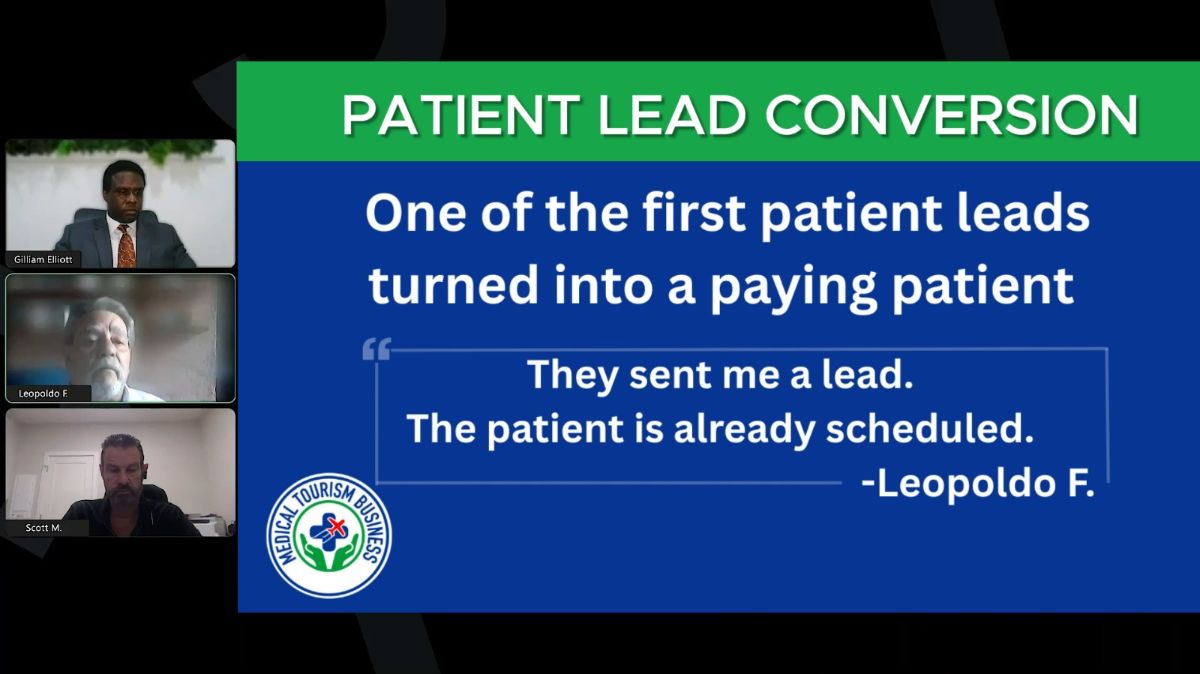
To bring in clients, you need patient leads, whether through your own marketing, purchasing leads, or a mix of both. A patient lead is someone actively looking for medical care abroad and searching for assistance. Your job is to reach out and show them why they should choose your business.
However you choose to generate leads, you need a predictable, consistent way to bring in new inquiries every week.
5. Know Your Numbers
Once your business is running, pay close attention to your numbers. They tell you what’s working and what isn’t.
Start with your website. You want to know two things: how many people are visiting it, and how they found you. That second part matters, because once you know where your visitors are coming from, you know what’s working. If most visitors come from Google, focus more on what’s helping you get found there. If a paid ad brought in almost no one, stop spending money on it.
The other number worth tracking is how many visitors reach out to you. If a hundred people visit your site and only two contact you, that’s a sign your website isn’t doing its job. When your response rate is low, dig into why. Maybe the site is confusing, maybe it doesn’t build enough trust, or maybe there aren’t clear calls to action encouraging people to reach out. Once you identify the reason and fix it, more visitors will turn into real inquiries, and that’s what grows your business.
Spend Smart, Not Big
Whether you’re starting with a small budget or a large one, the goal is the same: stay lean, and put your money into the few things that move the business forward. That means expanding your understanding of the business and getting clients through the door.
Build your medical tourism business
Turn industry knowledge into a working strategy
MTB provides certification, patient leads, training, and business resources for facilitators and healthcare providers.
Explore Certification
About the author
Gilliam Elliott Jr.
Gilliam has devoted himself to educating people about medical tourism for the last decade. Throughout that time, he has helped companies and individuals from all over the world start, manage, and grow their businesses by implementing proven practices and strategies. His passion for this industry has driven him to help founders create successful and profitable medical tourism businesses, achieve long-term growth, and become leaders in the field.