An international patient finds your clinic at 10 PM their time, ready to book a consultation. Your office is closed and eight time zones away. They send a message into the void, wait a day for a reply, and by the time someone answers, they have already booked a call with another provider who let them schedule on the spot.
That gap, between the moment a patient wants to book and the moment you can respond, is where medical travel providers and facilitators quietly lose patients every week. Patient self-scheduling closes that gap.
What Is Patient Self-Scheduling?
Patient self-scheduling is a booking flow that lets a patient pick an open time and confirm it themselves, with no back-and-forth required. You set the rules, which consultation types, which team members, and which time windows are available, and the system books the patient against your real calendar within those limits.
In medical travel, this matters most at the consultation stage. A patient who has shown interest can book a call or video consultation the instant their interest is highest, instead of waiting through a chain of emails across time zones. You stay in control of availability. The patient gets the immediacy they expect.
Why It Matters Now
Patients book healthcare the way they book everything else, online and on their own schedule. According to Experian Health’s State of Patient Access 2024 survey, 89 percent of patients say the ability to schedule appointments anytime through online or mobile tools is important to them.
In medical travel, that expectation is sharper, not softer. Your patients are often researching late at night, in a different time zone, comparing several providers at once. The one who lets them lock in a time immediately earns the conversation. The one who makes them wait for office hours loses them to the gap.
The Benefits for Providers and Facilitators
Recovered team time. Every inquiry that books itself is one your staff does not have to chase through email or voicemail across a time difference. That time goes back into patients who are already moving forward.
Patients captured outside your hours. A patient booking a Thursday consultation at midnight their time is a patient you did not have to keep a phone line open for. Interest that used to die overnight turns into a confirmed appointment.
Fewer no-shows. A patient who picks their own time is more committed to it than one who accepts whatever slot they are offered. Choosing the time, getting instant confirmation, and being able to reschedule with a tap all reduce the chance of an empty slot.
More booked consultations. Self-scheduling is not only a convenience. It is an acquisition channel. The faster a patient can commit, the more of your interested patients turn into real appointments.
Self-Scheduling Is Built Into Our Patient Lead Service
If building and managing a self-scheduling system on your own sounds like work you do not have time for, the good news is that you do not have to. It is already built into our patient lead generation service.
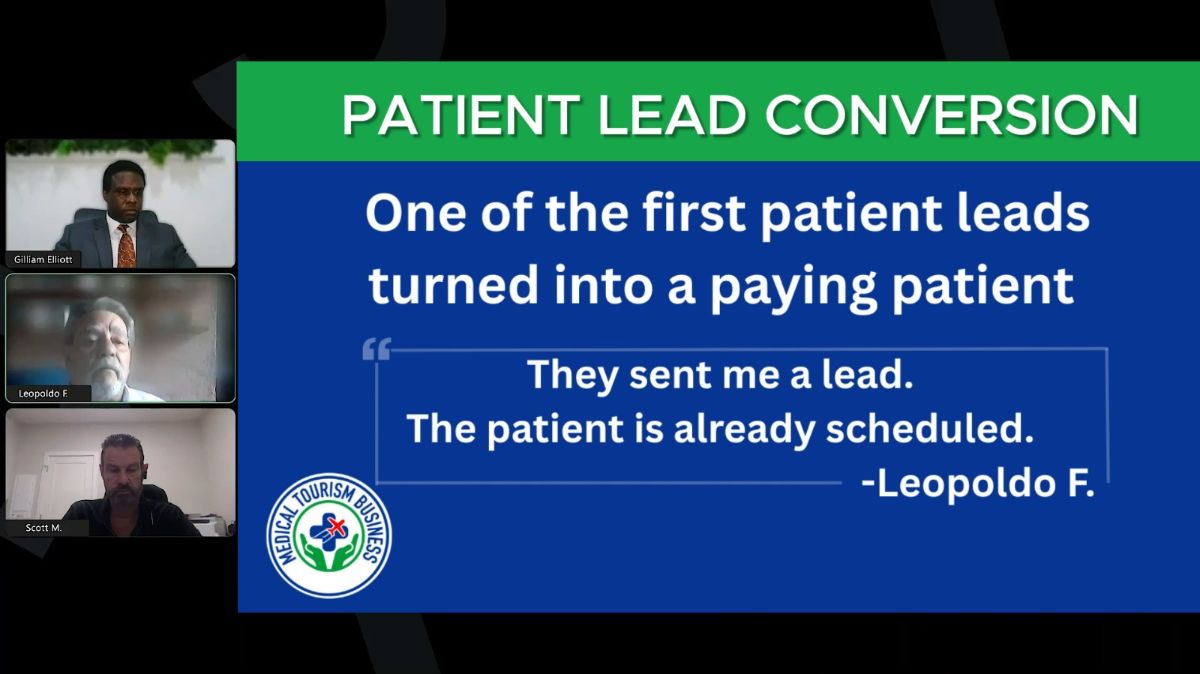
You receive verified, exclusive international patient inquiries delivered directly to your inbox or CRM in real time. Every prospect is screened through multilayer AI verification before it reaches you, so you are speaking with patients who have real intent. After completing the intake form, patients can self-schedule a consultation on the spot, based on the availability you set. We find that 40 to 50 percent of patients choose this option, which lifts your conversion before you even make contact. We take no commission or profit sharing, so you keep every patient relationship.
In short, you get the booked consultations that self-scheduling produces, without building any of it. You can see the packages and pricing here.
How to Use Self-Scheduling Well
Whether it runs through our service or your own setup, a few rules make self-scheduling work in a medical travel context.
Define which consultations are self-bookable. Start with the high-volume first step, the initial consultation or discovery call. Keep complex case reviews for manual booking until the flow is steady.
Set your availability and buffers clearly. Specify the time windows you want to offer, account for time-zone differences, and leave buffer time between calls so your team is never double-booked.
Capture contact details up front. The booking form should collect the patient’s name, email, and phone number at the time of booking, which feeds your reminders and gives you a way to reach them if plans change.
Send reminders. A patient booking from another country benefits from a clear confirmation and a reminder ahead of the call, which protects against the time-zone mix-ups that cause missed appointments.
Make it easy to reschedule. A conflict should turn into a moved appointment, not a lost patient. Letting patients reschedule themselves keeps the booking alive.
Frequently Asked Questions
What is patient self-scheduling in medical travel?
It is a booking flow that lets an international patient choose and confirm a consultation time themselves, within the availability you set, with no email back-and-forth across time zones.
Why does self-scheduling matter for international patients?
International patients research across time zones and compare several providers at once. Letting them book immediately captures them at the moment of highest interest, instead of losing them while they wait for a reply.
Does self-scheduling reduce no-shows?
Patients who choose their own time tend to be more committed to it, and instant confirmation plus easy rescheduling reduce the chance of an empty slot.
Do I have to build a self-scheduling system myself?
No. Self-scheduling is built into our patient lead generation service, so patients can book a consultation the moment they finish the intake form.
Final Takeaway
In medical travel, the provider who lets a patient book immediately wins the patient. Self-scheduling closes the gap between interest and action, recovers your team’s time, and turns late-night, cross-time-zone interest into confirmed consultations.
You can build the flow yourself, or start receiving verified patient inquiries with self-scheduling already built in. View the patient lead packages and pricing here.
Build your medical tourism business
Turn industry knowledge into a working strategy
MTB provides certification, patient leads, training, and business resources for facilitators and healthcare providers.
Explore Certification
About the author
Gilliam Elliott Jr.
Gilliam has devoted himself to educating people about medical tourism for the last decade. Throughout that time, he has helped companies and individuals from all over the world start, manage, and grow their businesses by implementing proven practices and strategies. His passion for this industry has driven him to help founders create successful and profitable medical tourism businesses, achieve long-term growth, and become leaders in the field.