

Practical Support That Delivers
Wil D.
Member shares how MTB's practical tools, CMTA certification, and one-on-one sessions helped him launch.
Call Us Today USA +1 561-909-7178 Info@MedicalTourismBusiness.com
Scaling medical tourism companies and healthcare organizations worldwide
Every year, millions of patients travel abroad for medical care. The organizations that serve them — from independent facilitators to specialty clinics and hospitals — rely on proven resources, medical tourism training, and a steady flow of international patient leads to grow. Medical Tourism Business was built to deliver all three.
Whether you are a healthcare provider looking to attract more international patients to your clinic or a professional building a medical tourism agency from the ground up, MTB gives you the training, tools, and support to operate professionally and scale your organization.
Our membership programs give medical tourism founders everything needed to launch and run a professional agency from day one.
Choose Your MembershipWe operate as a patient lead generation partner. We provide exclusive, verified patient leads to clinics and medical tourism organizations and do not manage patient travel, take commissions, or participate in any profit-sharing arrangements.
View Lead Packages
We run procedure-specific campaigns for the regions you target, SMS-verify every inquiry, and send them to your inbox or CRM in real time. We handle the advertising, so your team can focus on consultations and care.

The Certified Medical Travel Agent (CMTA) is the global standard for professionals entering the medical tourism industry. Built specifically for startup founders, it provides the foundation needed to operate with competence, compliance, and certainty.

Our membership programs give medical tourism founders everything needed to launch and run a professional agency — from certification and legal contracts to patient leads, clinic introductions, coaching, and a custom website.
Medical tourism professionals share how MTB certification, memberships, and patient leads helped them build and grow their businesses.
Wil D.
Member shares how MTB's practical tools, CMTA certification, and one-on-one sessions helped him launch.
Gizelle A.
CMTA Member shares her experience taking the certification and what it unlocked for her business.
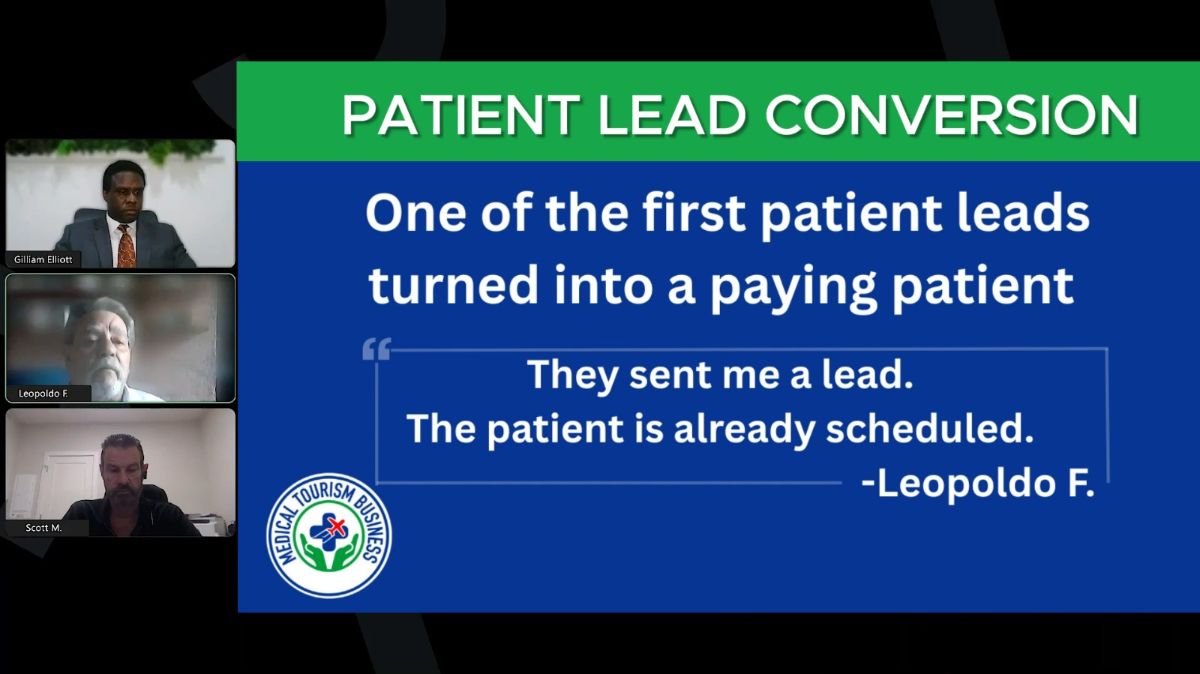
How MTB patient leads turn into booked medical trips — a real example from start to finish.
Ben W.
MTB's essential resources and tools proved very valuable for his startup, with the Membership and CMTA certification providing structure from day one.

Khalid A.
Khalid shares how the CMTA certification and MTB membership gave him the tools, resources, and support to grow his startup.

Ibrahim B.
After a bad experience with another program, Ibrahim shares why the CMTA was worth every dollar.
How medical tourism agency contracts protect you and your business — interview with founders.

Dr. Sam
Dr. Sam shares why the CMTA certification is the best medical tourism course in the industry.

Atakan Y.
CMTA member discusses how the certification opened his eyes to aspects of the business he hadn't considered, giving him a clear understanding of exactly what to focus on.

Sahin M.
Sahin shares why the CMTA certification answered every question he had about starting a medical tourism business.
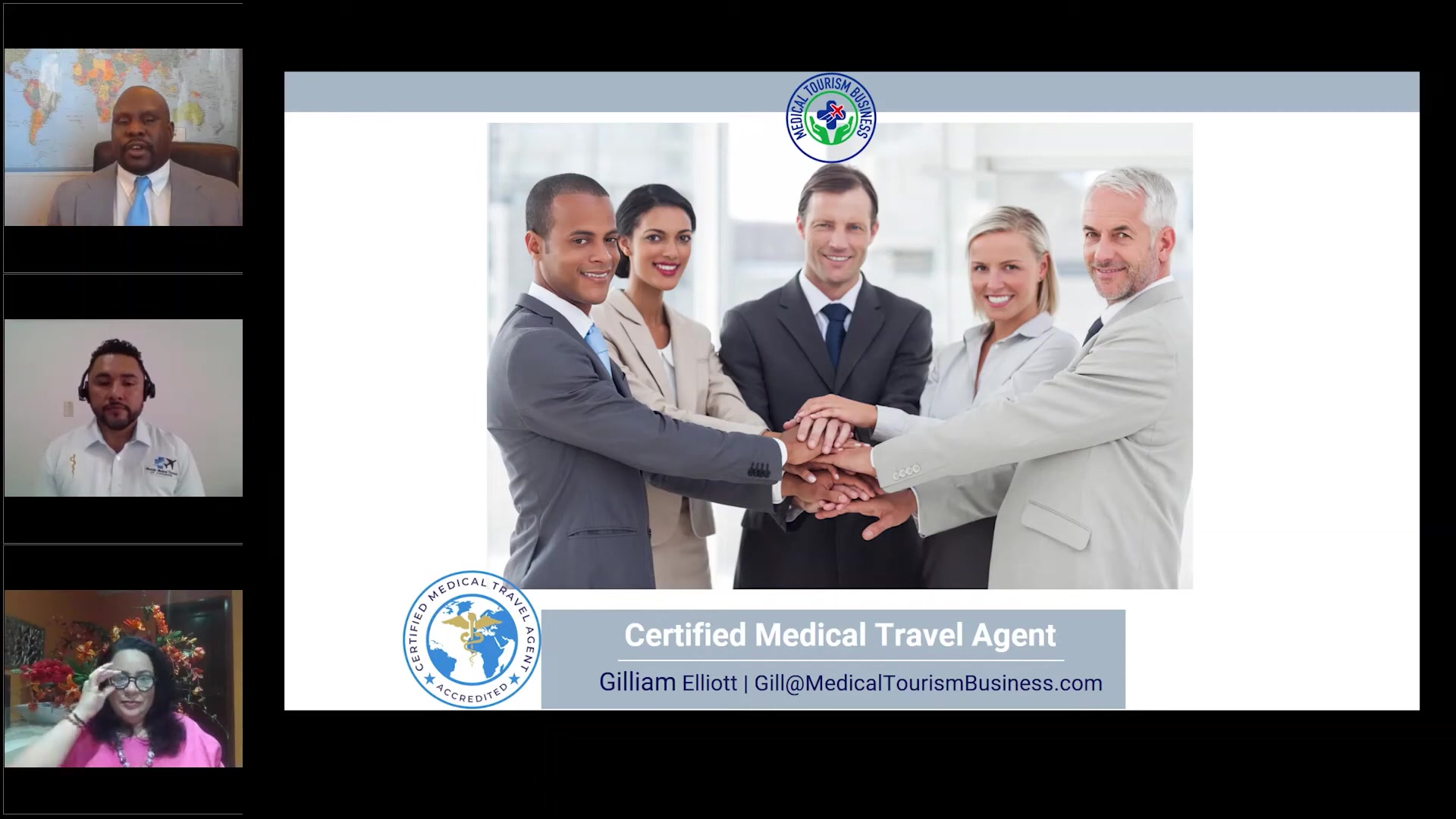
How startups benefit from medical tourism consultancy — interview with founders.

Hans R.
With a team already in place, Hans credits the CMTA with giving them everything needed to enter the medical tourism space.

Rubelda M.
Agency Builder Member discusses how the CMTA certification gave her the knowledge and tools to succeed and how she received dozens of quality patient leads.

Lauren O.
Lauren shares how the CMTA gave her a clear foundation in medical tourism — easy to follow, self-paced, and practical from day one.
Whether you want to attract international patients or build a facilitation business from the ground up, MTB gives you the programs and resources you need.
Going alone means facing trial and error, uncertainty, and unpredictable growth. With MTB, you skip the guesswork and get the support and resources you need from the beginning.
Skip months of trial and error with a system already proven to work.
Ready-to-use contracts built specifically for medical tourism facilitators.
Get guidance from experts who will help you overcome any challenges.
Quality patient inquiries delivered to you from day one.
Every program includes the CMTA certification. Higher tiers add patient leads, coaching, a custom website, and more.
Pay in full and save.
Two-payment option adds 3%. Second payment is drafted automatically in 30 days.
From exploring the industry to dental tourism specialty – structured programs for every stage.
Facilitators and professionals share how CMTA and MTB membership helped them launch and grow.
“Everyone knows you need a solid foundation, and for our customers that means being credible, trustworthy, and having their best interest in mind. Medical Tourism Business is really where we started. The certification…

The one-on-one sessions have been invaluable. The resources provided have been super helpful as well — I did a site visit in Turkey recently and just having those documents already drawn out for me was one less thing to…

This certification was worth every dollar I spent on it, and I highly recommend it.
The CMTA certification was really good. I had no prior knowledge of medical tourism and it set a great foundation. It was easy to understand and I liked that I could go at my own pace.
The CMTA certification was informative and valuable for building a better business. The support from the team at MTB has helped me feel more confident and capable as a healthcare travel facilitator.
The certification content was well organized and very valuable. It was easy to follow and the material answered all the questions someone would have when starting a medical tourism business.
The CMTA certification gave me all the knowledge, tools, and techniques I needed to become a successful medical tourism facilitator and business owner. MTB is an expert in patient lead generation, in the short time I've…
I really enjoyed the CMTA certification. After completing it, I feel like I gained valuable knowledge to help me with my medical tourism business. The course was detailed, covering statistics on people who travel for…

I highly recommend the Certified Medical Travel Agent certification to any organization seeking to distinguish itself through integrity, compliance, and global best practices. It is an invaluable investment for those…

The data in the course is completely up-to-date, and the contracts they provide are highly effective. Both offer significant value. Thank you!
I enjoyed the course. It is easy to understand and very informative.

I purchased their Legal Contract Package for my medical tourism company, and it included all the agreements I needed.

I enjoyed the certification. The information is very easy to digest.

I truly enjoyed the course. Very easy to follow along, and the videos are very informative. Great course!

Completing the medical travel agent course has been a game-changer for me. The program provided a deep understanding of coordinating medical travel, from navigating healthcare systems to ensuring seamless patient…

I recently completed the Certified Medical Travel Agent Certification and I am extremely satisfied with the knowledge and skills I gained. The course content was comprehensive, covering all aspects of medical tourism…

I recently completed the online Medical Tourism Course offered by MTB. I found the course content to be very informative, enjoyable, and straightforward. It also alerted me to certain areas that require my attention…

I am happy to have found this course, which helped me turn my idea into a reality. I found the content to be very useful and concise. After completion, I feel confident enough to start my journey. I would like to…
My knowledge and skills at the beginning of the course were limited, but through this certification, I have learned so much. MTB has fantastic instructors, always available to answer any questions I had. I highly…

Thank you, Medical Tourism Business, for the awesome training!

MTB is an excellent resource for medical tourism, the certification course is very useful and practical! There's no academic jargon, and the course is designed for everyday people who have the desire to enter the…

Thank you so much to the Medical Tourism Business team! I appreciate everything you have taught me, and I am grateful for the support and assistance you have provided throughout this process!

Great certification and training program! MTB provides every resource to help their clients succeed. Thank you!

I highly recommend this course for anyone wanting to get into the medical tourism business. They offer a vast amount of information and material that opens your eyes and helps you take the best steps forward.

I am really happy that I decided to take the Certified Medical Travel Agent course because it increased my knowledge about being a medical tourism facilitator. It was very interesting and informative. It is not just…
Medical Tourism Business has been instrumental in assisting me to get my new company started on solid ground. The quick responses from the team to questions, as well as their website design services, have been very…
The healthcare tourism course I took with Medical Tourism Business was eye-opening for me. It helped me learn a lot about the medical tourism industry as a whole and it’s potential for growth in the future. The topics…

As a nurse and avid global traveler, I found the content in the certification extremely valuable, current, and easy to follow. The material addressed the questions I had about starting a medical tourism business. The…
I want to thank the team at Medical Tourism Business, who made it possible for me to become a certified medical tourism professional. I highly recommend this online certification for anyone who wants to start a health…
I really enjoyed the certification and found it very informative. The course material was well structured and simplified making it manageable to digest.

The resources that Medical Tourism Business provides are very useful for my startup company. Their contracts, practical manuals, and the other tools help to enhance the professionalism of my company, help me train and…

The certification course by MTB allowed me to further develop my knowledge in healthcare travel. It explained step by step the process of coordinating trips for patients. It also showed me different ways to market my…
The certification was highly informative, engaging, and an overall great resource for anyone interested in the medical tourism industry. It provides you with a great foundation of knowledge & resources to feel…

The certification course was very informative and well structured. I highly recommend the course.
The Certified Medical Travel Agent course was put together very well, with interesting content that addressed my concerns about this niche market. Compliments to Medical Tourism Business for the support and documents…

Thank you so much. I thought that I knew lots of things about medical tourism until I met you. Now I know that still I need to learn lots of things from you. Thank you very much
Get Patient Leads, Get Certified, or Become a Member. Call USA 561-909-7178.
Email Info@MedicalTourismBusiness.com or send a message.